
How to Handle an Oversized Outlook PST File Without Putting Your Mailbox at Risk
An Outlook PST file can quietly grow for years. Every email, attachment, calendar entry, contact, task, and archived conversation adds more information to the data file. At first, users may notice nothing unusual. Eventually, however, an excessively large PST can make Outlook slower, harder to manage, and more vulnerable to errors.
The important point is that a large PST is not automatically corrupted. The correct solution depends on whether Outlook can still open the file normally. If it can, reducing and reorganizing the data may solve the problem. If the PST has become damaged or inaccessible, a recovery process may be necessary.
Understanding this difference can help users protect their mailbox instead of applying the wrong repair method.
Why Do Outlook PST Files Become So Large?
PST files typically grow because users continue storing mailbox information without regularly cleaning or archiving it.
Some of the biggest contributors include:
- Years of accumulated emails
- Messages with large attachments
- Large Sent Items folders
- Old project correspondence
- Duplicate or unnecessary messages
- Archived business communication
- Deleted items that have not been properly cleared
- Multiple folders containing historical data
A mailbox that has been used for many years can eventually contain tens of thousands of messages.
The larger the file becomes, the more work Outlook may need to perform when opening folders, searching messages, or updating mailbox data.
Warning Signs That PST Size Is Becoming a Problem
Users should pay attention when Outlook starts behaving differently.
Common warning signs include:
- Outlook takes much longer to launch
- Folder switching becomes slow
- Searches take unusually long
- Outlook freezes when opening large folders
- Messages cannot be moved or copied
- The data file reports a size-limit error
- Outlook crashes repeatedly
- The PST stops opening entirely
According to Microsoft-related guidance summarized by Amrev, modern Unicode PST files commonly have much larger limits than older ANSI files, but extremely large files can still perform poorly even before reaching a hard limit.
First Protect the Original PST File
Before attempting cleanup or repair, create a backup copy of the Outlook data file.
Close Outlook completely and copy the PST to another safe location. Avoid performing aggressive repair operations directly on the only copy of the mailbox.
This simple precaution is especially important if the file contains years of business communication or other information that cannot easily be recreated.
What to Do If Outlook Still Opens the PST
If Outlook can open the data file and the mailbox contents appear intact, recovery software may not be the first step.
Instead, reduce the amount of active data stored in the PST.
Remove Unnecessary Messages
Delete emails that are no longer required, particularly messages containing large attachments.
Save Large Attachments Separately
Important files can be stored outside Outlook when appropriate. After confirming that an external copy is safe, unnecessary attachment copies can be removed from the mailbox.
Empty Deleted Items
Deleting an email does not always immediately shrink the physical PST file. Clear the Deleted Items folder before attempting compaction.
Archive Older Mail
Move older years, completed projects, or inactive correspondence into a separate PST file rather than keeping everything in one large mailbox.
Compact the Data File
After cleaning the mailbox, Outlook’s Compact Now option can reclaim unused space within the PST. Amrev’s guide also notes that deleting items alone does not immediately reduce the PST’s physical size; compaction is needed to reclaim unused space.
When an Oversized PST Becomes Inaccessible
The situation changes when Outlook no longer opens the file, reports data-file errors, or shows incomplete mailbox information.
At this stage, users searching for how to repair an oversized Outlook PST file should avoid repeatedly forcing Outlook to load the damaged file.
A safer workflow is to preserve the original, work from a copy, and attempt to recover readable mailbox data.
Specialized PST recovery software can examine the internal file structure and identify emails, folders, attachments, contacts, calendar information, tasks, and notes that remain recoverable.
Using Amrev for an Oversized or Damaged PST
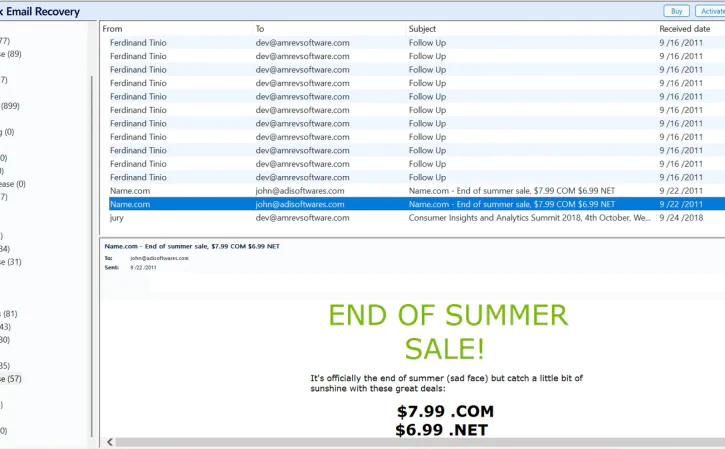
Amrev Outlook Email Recovery is designed for PST files that have become damaged or inaccessible. The software does not directly split or compact a large PST. Instead, it scans a copied source file and can rebuild recoverable mailbox information into a separate PST with the full version.
Its workflow recommends starting with a normal scan and using a more intensive scan if the first result is incomplete or the PST is severely damaged. Users can then inspect important folders and mailbox items before working with the recovered file.
This distinction matters because recovery and size management solve different problems.
Do Not Put Everything Back Into One Huge PST
After recovering or reducing an oversized PST, avoid immediately creating the same problem again.
A more manageable Outlook setup might separate information into:
- Current mailbox data
- Previous-year archives
- Completed projects
- Historical customer communication
- Long-term reference folders
Smaller, purpose-based PST files are generally easier to back up, move, inspect, and troubleshoot than one enormous file containing many years of information.
Ways to Prevent Future PST Growth
A few habits can make Outlook data easier to manage:
- Review mailbox size periodically
- Archive older messages
- Remove unnecessary large attachments
- Keep backups of important PST files
- Avoid keeping every historical email in one file
- Close Outlook properly before shutting down the computer
- Investigate performance problems before they become severe
Regular maintenance is easier than dealing with a PST that has already become inaccessible.
Final Thoughts
An oversized Outlook PST file requires the right solution for its condition. When Outlook can still open the data file, cleaning, archiving, and compacting it can often improve manageability. When the PST is damaged or will not open, protecting the original file and recovering readable mailbox data is a safer approach.
The key is not simply making the file smaller. The goal should be to preserve important emails and mailbox organization while creating a more manageable Outlook data structure for the future.

POPULAR POST

Which Health Plans Offer Pet Health Insurance

Pet Insurance Is Easy As AKC

Finding Discount Pet Supplies


