
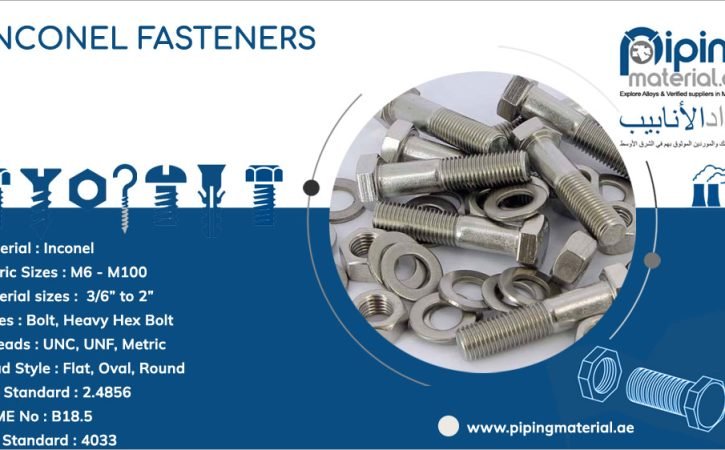
In industries where extreme temperatures, high pressure, and aggressive chemicals are part of daily operations, ordinary fasteners simply cannot perform. This is where inconel bolts and hastelloy bolts come into play. These high-performance fasteners are engineered from nickel-based superalloys designed to withstand some of the harshest industrial environments.
From oil and gas refineries to chemical processing plants and aerospace applications, both materials offer exceptional strength and corrosion resistance. However, understanding the differences between them can help engineers, procurement managers, and project planners choose the most suitable solution.
What Are Inconel Bolts?
Inconel bolts are manufactured from Inconel, a family of nickel-chromium-based superalloys known for their outstanding resistance to heat and oxidation. These bolts maintain their mechanical properties even at elevated temperatures, making them ideal for high-heat applications.
Key Properties of Inconel Bolts:
-
Excellent resistance to oxidation and scaling at high temperatures
-
Superior tensile strength
-
Good fatigue resistance
-
Strong performance under thermal cycling
-
High resistance to pressure and stress
Inconel fasteners are commonly used in gas turbines, heat exchangers, nuclear reactors, and exhaust systems. Grades such as Inconel 600, 625, and 718 are widely used in bolting applications due to their combination of strength and corrosion resistance.
Because of their ability to retain strength at temperatures exceeding 1000°F (540°C), inconel bolts are often the preferred choice in aerospace and power generation industries.
What Are Hastelloy Bolts?
Hastelloy bolts are made from another group of nickel-based alloys, but they are particularly known for their exceptional resistance to corrosion in highly aggressive chemical environments. Hastelloy contains varying amounts of chromium, molybdenum, and iron, depending on the specific grade.
Key Properties of Hastelloy Bolts:
-
Outstanding resistance to pitting and crevice corrosion
-
Exceptional resistance to stress corrosion cracking
-
Strong performance in acidic environments
-
High resistance to chlorides
-
Good strength at elevated temperatures
Hastelloy fasteners are widely used in chemical processing plants, marine applications, pollution control equipment, and offshore oil platforms. Grades such as Hastelloy C276 and C22 are especially popular for their resistance to harsh acids and corrosive chemicals.
When applications involve exposure to hydrochloric acid, sulfuric acid, or seawater, hastelloy bolts often outperform other alloy fasteners.
Inconel Bolts vs Hastelloy Bolts: Key Differences
Although both inconel bolts and hastelloy bolts are nickel-based alloys, their performance strengths differ slightly depending on the application.
1. Heat Resistance
Inconel bolts are generally preferred in extremely high-temperature environments. They retain their strength and structural integrity even under intense heat and pressure.
Hastelloy bolts also perform well at elevated temperatures but are typically chosen more for corrosion resistance than for extreme heat endurance.
2. Corrosion Resistance
Hastelloy bolts excel in highly corrosive environments, especially in the presence of strong acids and chlorides. Their resistance to pitting and crevice corrosion makes them ideal for chemical processing.
Inconel bolts also provide good corrosion resistance but are more commonly selected when oxidation resistance at high temperatures is the primary concern.
3. Mechanical Strength
Both materials offer excellent mechanical strength, but certain grades of Inconel (like 718) provide extremely high tensile strength, making them suitable for heavy-load applications.
Hastelloy provides good strength as well, but its main advantage lies in chemical resistance rather than maximum load-bearing capacity.
4. Cost Considerations
Both inconel bolts and hastelloy bolts are premium fasteners and come at a higher cost than stainless steel or carbon steel bolts. However, their durability, longevity, and reduced maintenance requirements often justify the investment in demanding environments.
Industrial Applications
Oil and Gas Industry
In offshore platforms and refineries, fasteners are exposed to high pressure, corrosive fluids, and extreme temperatures. Both inconel bolts and hastelloy bolts are widely used in valves, pumps, and pressure vessels.
Chemical Processing
Hastelloy bolts are especially favored in reactors, heat exchangers, and pipelines that handle aggressive chemicals. Their resistance to acid attack ensures longer service life.
Aerospace Industry
Inconel bolts are extensively used in jet engines and turbine assemblies due to their ability to withstand intense heat without losing strength.
Power Generation
Both materials are used in nuclear and thermal power plants where high-temperature stability and corrosion resistance are critical.
Choosing the Right Bolt for Your Application
When selecting between inconel bolts and hastelloy bolts, consider the following factors:
-
Operating temperature
-
Exposure to chemicals or acids
-
Pressure levels
-
Mechanical load requirements
-
Budget constraints
-
Compliance with industry standards
If your application involves extremely high heat and mechanical stress, inconel bolts may be the better choice. If the environment is highly corrosive with strong acids or chlorides, hastelloy bolts are typically more suitable.
Consulting with experienced fastener manufacturers and material engineers can help ensure that the selected alloy meets both performance and safety requirements.
Conclusion
Both inconel bolts and hastelloy bolts are high-performance fasteners designed for demanding industrial applications. While they share similarities as nickel-based alloys, their strengths differ in specific areas. Inconel excels in high-temperature strength and oxidation resistance, while Hastelloy stands out for its superior corrosion resistance in aggressive chemical environments.
Understanding your operational conditions is key to making the right choice. By selecting the appropriate alloy, industries can ensure safety, longevity, and optimal performance even in the most extreme working conditions.
Investing in the right fastener today can prevent costly failures tomorrow.

POPULAR POST

Which Health Plans Offer Pet Health Insurance

Pet Insurance Is Easy As AKC

Finding Discount Pet Supplies