
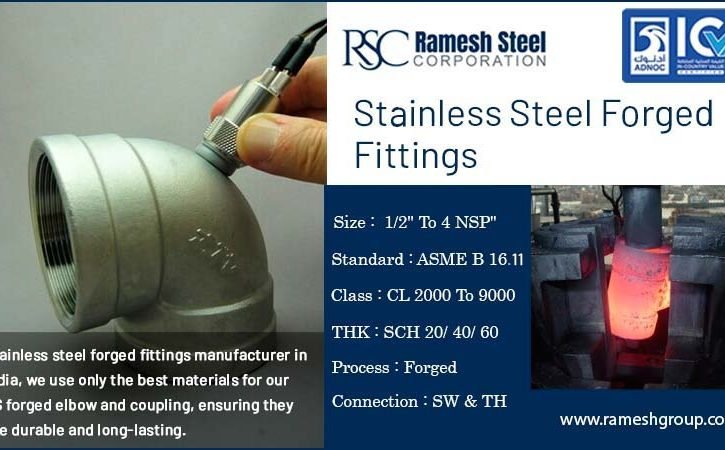
In the world of piping systems, reliability, strength, and long-term performance are critical. Whether used in oil and gas, petrochemicals, power generation, marine engineering, or general industrial sectors, the right type of fittings and flanges ensures safe and leak-free operations. Among the most widely used components in these environments are Stainless Steel Forged Fittings and Mild Steel Flanges, each offering its own benefits depending on the application’s requirements. Understanding their characteristics, advantages, and industry relevance can help businesses make informed decisions.
What Are Stainless Steel Forged Fittings?
Stainless Steel Forged Fittings are components manufactured by shaping stainless steel under high pressure, creating a dense and durable structure. The forging process enhances the material’s mechanical properties, resulting in superior strength, resistance to impact, and improved structural integrity compared to cast components.
These fittings are commonly used to connect pipes, valves, pumps, and other equipment in high-pressure environments. They come in a variety of types, such as:
-
Socket Weld Elbows
-
Threaded Tees
-
Couplings
-
Unions
-
Crosses
-
Caps and Plugs
The most popular grades used for stainless steel forged fittings include SS 304, SS 316, and SS 317, all known for excellent corrosion resistance, easy fabrication, and compatibility with different media.
Key Advantages of Stainless Steel Forged Fittings
1. Exceptional Strength
Forged fittings are much stronger than machined or cast fittings due to their grain refinement during forging. This makes them suitable for high-pressure and high-temperature applications.
2. Corrosion Resistance
Stainless steel is naturally resistant to oxidation, rust, and chemical exposure. This is crucial in industries like petrochemical processing and offshore drilling.
3. Leakage Prevention
The precise manufacturing process ensures tight and secure joints, reducing the risk of leaks in critical pipelines.
4. Durability and Longevity
Stainless steel forged fittings perform exceptionally well even in harsh conditions, providing long service life and reduced maintenance costs.
5. Hygiene and Cleanability
In industries like pharmaceuticals and food processing, stainless steel’s clean surface and resistance to contamination make it the preferred material.
Understanding Mild Steel Flanges
Mild Steel Flanges are widely used components designed for joining pipes, pumps, valves, and other equipment. Mild steel (MS) contains low carbon content, typically up to 0.25%, making it more malleable and easier to fabricate compared to other types of steel.
MS flanges are available in several types, including:
-
Weld Neck Flanges
-
Slip-On Flanges
-
Blind Flanges
-
Socket Weld Flanges
-
Lap Joint Flanges
-
Threaded Flanges
Their versatility and cost-effectiveness make them a popular choice across industries such as water supply, construction, agriculture, and low-pressure pipeline systems.
Benefits of Mild Steel Flanges
1. Cost-Effective
Mild steel is less expensive than many other materials, offering excellent value for large-scale installations.
2. High Weldability
Its low carbon content makes MS flanges easy to weld and fabricate, reducing production time.
3. Strength and Durability
Despite being cost-friendly, mild steel offers good tensile strength and flexibility, making it suitable for low to medium-pressure systems.
4. Versatile Application
From HVAC systems to general engineering, MS flanges are suitable for numerous operational environments.
5. Ease of Maintenance
Mild steel flanges require minimal maintenance and can be easily repaired when needed.
Choosing Between Stainless Steel Forged Fittings and Mild Steel Flanges
While both components serve essential roles in piping systems, the choice depends on operational requirements:
Use Stainless Steel Forged Fittings When:
-
High pressure or high temperature is involved
-
Corrosion resistance is critical
-
Hygiene and cleanliness are required
-
Long-term reliability is a priority
-
The fluid medium is corrosive, acidic, or sensitive
Use Mild Steel Flanges When:
-
The system operates under low to moderate pressure
-
Budget constraints are significant
-
The environment is non-corrosive
-
Ease of fabrication is important
-
The application involves structural or water-supply pipelines
Applications Across Industries
Oil and Gas
SS forged fittings provide leak-proof and corrosion-resistant connections, while MS flanges are used in above-ground pipelines and structural installations.
Chemical and Petrochemical
Stainless steel is ideal for handling corrosive fluids, ensuring long-term safety.
Water Treatment Plants
Mild steel flanges are widely used due to their cost-efficiency and ease of installation.
Power Generation
High-temperature steam systems rely on forged fittings for safety and performance.
Manufacturing and Fabrication
Both components play vital roles in machinery, equipment fabrication, and structural piping.
Conclusion
Both Stainless Steel Forged Fittings and Mild Steel Flanges are indispensable in industrial piping and engineering applications. Choosing between them depends on factors like pressure, temperature, corrosion risk, budget, and the specific needs of your project. Stainless steel forged fittings deliver unmatched strength and corrosion resistance, while mild steel flanges offer affordability and versatility.
Investing in high-quality materials ensures better performance, safety, and longevity of your systems—making it essential to source these components from reliable manufacturers and suppliers.

POPULAR POST

Which Health Plans Offer Pet Health Insurance

Pet Insurance Is Easy As AKC

Finding Discount Pet Supplies